


When Buerger Disease was first mentioned, I thought it was a strange diagnosis that only sometimes appears in real life but is frequently mentioned in medical texts. After that, however, a vascular surgeon spoke about a 34-year-old man who had been a skateboarder in Phoenix and had lost most of his right index finger and two toes due to something that was induced by Marlboros rather than diabetes or frostbite. It stayed with me.
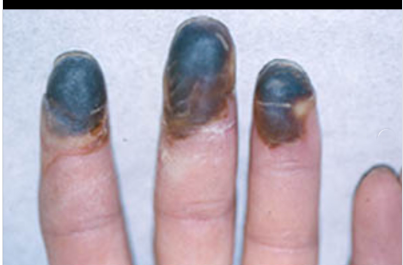
Buerger’s disease is incredibly accurate and ruthlessly persistent. It inflames the small and medium-sized blood arteries in the limbs, especially the hands and feet, until they completely shut down. The tissue suffocates in the absence of oxygenated blood. Pain begins first, followed by ulcers and, in the worst situations, irreversible tissue death. The only defense that has been proven? Immediately and totally giving up all tobacco use.
Buerger Disease (Thromboangiitis Obliterans)
| Key Fact | Details |
|---|---|
| Condition Name | Buerger Disease (Thromboangiitis Obliterans) |
| Primary Cause | Tobacco use (smoking, chewing tobacco, marijuana) |
| Affected Areas | Small and medium arteries/veins in hands and feet |
| Common Symptoms | Pain, ulcers, gangrene, numbness, Raynaud’s phenomenon |
| Typical Age Range | Under 45 years |
| Gender Predominance | More common in men |
| Treatment Focus | Complete cessation of tobacco/nicotine |
| Long-term Risks | Gangrene, amputation, chronic pain |
| External Reference |
It is somewhat similar to the way a tiny fire spreads, initially smoldering and then devouring everything it comes into contact with until quickly put out. This illness is frequently not the consequence of long-term misuse. Young males in their 20s or 30s are frequently affected. They may smoke occasionally, chew tobacco, or even use marijuana seldom without realizing that they are setting off a chain reaction inside their body.
The physical symptoms appear gradually, and many of them pass for other, more typical issues. Walking pain, bluish skin that appears to be reacting to the cold, or a faint tingling in the fingers—these symptoms sometimes go unnoticed until they develop into chronic, excruciating sores that never fully heal. Some people have symptoms similar to Raynaud’s. Others experience the sensation of an unseen force squeezing their limbs. Many patients have been experiencing similar symptoms for months or even years by the time they receive a diagnosis.
Usually, doctors provide a brief but firm prescription: stop smoking completely or the illness will worsen. There isn’t a compromise. Inflammation can be exacerbated by smoking merely one cigarette each day. Despite its great clarity and medical foundation, that advice is surprisingly difficult to execute. The usual patient with Buerger’s disease is fighting not only inflammation but also a habit that has frequently served as their mental support system during times of stress or anxiety. Nicotine’s hold is strong.
The fact that the disease’s progression frequently stops—and occasionally even improves—once tobacco use is stopped is especially telling. That is a direct and well-established consequence, not just a coincidental association. Within months of stopping, some people report a dramatic reduction in their symptoms. Others stabilize enough that they are spared more severe measures, such as amputation. However, people who relapse even for a short time typically have a return of symptoms, frequently with more severe ones.
The existing medical treatments, such as anticoagulants to stop clotting, vasodilators to widen blood vessels, and anti-inflammatories to reduce flare-ups, are supportive rather than curative. They are helpful, but they don’t take the place of quitting. Antibiotics are used when ulcers get worse. Surgery is suggested in more severe situations to control persistent discomfort or restore blood flow. There are hazards associated with spinal cord stimulation, including nerve injury and implant problems, and its effects are not always consistent.
When infections get out of control or gangrene develops, amputation becomes the last, reluctant option. The choice is never taken lightly. A young construction worker lost his thumb, and according to one surgeon, it was a loss of identity as well as function. His grip on tools was different. Eventually, he stopped going back to the employment sites.
I recall thinking at the time how completely avoidable some catastrophes can be, and how difficult it is to persuade someone of that in a timely manner.
It’s interesting to note that lifestyle modifications that are usually advised for other vascular disorders do not appear to be effective for Buerger Disease. Weight loss, better nutrition, and exercise are all beneficial for overall cardiovascular health, but none of them are crucial in this situation. Complete abstinence from nicotine and tobacco, including secondhand smoke, is the key switch that cannot be compromised.
Although some studies indicate a hereditary tendency, genetics may play a minor, supporting role, but behavior and environment take center stage. Patient education is especially important because of this uncommon clarity in medical causality.
Despite all of the scientific advancements, Buerger Disease is still not well known. Neither celebrity awareness campaigns nor news are dominated by it. It doesn’t have any social media challenges or ribbons. However, it leaves a physical, emotional, and often permanent mark on those it touches, frequently as they are just finding their footing.
The fact that so many of its victims are taken by surprise adds to its allure—and tragedy. They’re not old. They don’t sit around all day. Some are tradespeople or marathon runners. However, a common pattern frequently appears: early symptoms are dismissed, tobacco use is downplayed or justified, and there is an increasing gap between what is seen to be wrong and what is actually felt in the limbs.
However, the fact that certain results can be reversed gives rise to a tremendous sense of optimism. One of the rare medical recommendations that has no expenses and no pharmaceutical adverse effects is quitting smoking. When used early on, it’s also quite effective—even transformative. You can’t claim that about a lot of progressive vascular diseases.
Most Buerger Disease patients have experienced at least one near-miss—an infected sore, the possibility of amputation, or a night when the pain became intolerable—by the time they receive a definitive diagnosis. That moment, that thin line between function and loss, is frequently what ultimately motivates someone to give up.