


In the past, surgeons used their ability to cut and stitch cleanly to gauge their performance. They are now posing a different query, one that is subtly but noticeably better: how much can we treat while maintaining what is most important? This is where TAMIS comes in, not just as a process but also as a mentality change.
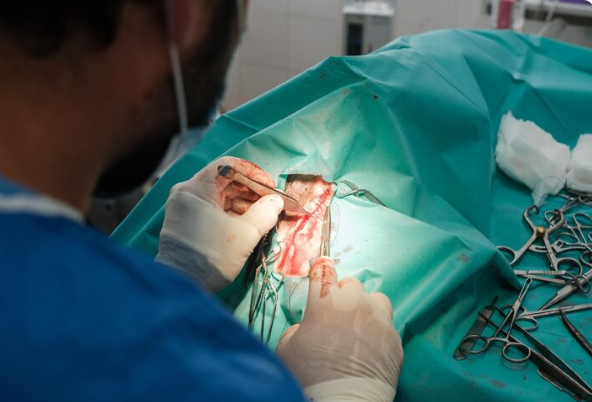
TransAnal Minimally Invasive Surgery, or TAMIS for short, starts with a small port that is placed through the rectum rather than a scalpel to the abdomen. Surgeons remove polyps or early-stage cancers with a level of accuracy that feels incredibly effective and, in many cases, very humane, using laparoscopic instruments and insufflation to gently enlarge the view.
TAMIS Surgery – Key Facts at a Glance
| Term | Details |
|---|---|
| Full Name | TransAnal Minimally Invasive Surgery (TAMIS) |
| Type of Procedure | Keyhole surgery performed through the rectum |
| Common Use Cases | Removal of benign rectal polyps, early-stage rectal cancers (T1, T2), rectal fistula repair |
| Main Advantages | Organ-sparing, less pain, shorter hospital stay, faster recovery |
| Average Procedure Time | Approximately 1 hour under general anesthesia |
| Recovery Timeline | Typically same-day or overnight discharge; quick return to normal activities |
| Long-Term Outcomes | Low recurrence when used appropriately; specimen sent for pathology |
| Follow-Up | Regular endoscopic surveillance required after surgery |
TAMIS greatly lessens the physical toll of surgery by avoiding big incisions and protecting adjacent organs. In aspects that are especially helpful to patients juggling treatment with employment, caregiving, or just the desire to return to life without extended disruption, it spares the rectum, frequently avoids the need for temporary ostomies, and speeds up recovery.
Elective treatments were postponed during the pandemic, and patients with benign but complex polyps frequently had to wait months for conventional surgery. As TAMIS gained greater attention, it provided a quicker method of exposure in addition to being safer. Hospital stays were shorter. Lower pain scores were reported by patients. Additionally, there were fewer institutional and personal expenses.
The method is a very effective middle ground for early-stage rectal tumors, which are usually classified as T1 or carefully chosen T2 lesions. Once deep tissue invasion has been proven, it does not try to take the place of major surgery. However, it produces a R0 resection—complete removal with clean margins—when utilized properly. Patients may be able to escape the cascade of chemotherapy, radiotherapy, or more invasive resections in these situations if subsequent therapies are not required.
I once had a conversation with a colorectal surgeon who had just finished a TAMIS procedure on a fifty-year-old guy. Despite its size, the lesion was confined. She assured me, taking off her gloves, “He’ll walk out tonight.” “He had anticipated taking a two-week vacation.” That faint smile of contentment stayed with me. It wasn’t pride. It was a sense of relief to accomplish as much as possible with the least amount of disturbance.
The way that TAMIS manages complexity with moderation is subtly admirable. The instruments are fragile. Training is necessary for the technique. Despite this, its results are highly adaptable. In addition to malignancies, surgeons frequently utilize it to remove scar tissue and mend fistulas. Teams can scale their intervention to the patient’s actual needs thanks to this flexibility, something that surgery hasn’t always done well.
For many patients, the imagined consequences of their illness carry more emotional weight than the actual illness. The diagnosis itself may not be as frightening as lengthy hospital stays, body-altering results, and protracted recuperations. TAMIS eliminates both physical and psychological strain by optimizing operations and freeing up human talent for other cases.
Surgical teams can find TAMIS candidates earlier by working with gastrointestinal specialists. A colectomy is no longer always the result of a big polyp discovered during a colonoscopy. This method is anticipated to become more commonplace in the upcoming years as screening systems advance and malignancies are detected earlier; in certain rectal instances, it may even be the recommended first-line treatment.
There is a substantial learning curve. Surgeons have to learn how to perceive depth in a small area, maneuver through delicate tissue with little room for error, and stay oriented in a hollow that wasn’t designed for equipment. However, in the hands of a skilled practitioner, the method becomes an extremely effective instrument once mastered.
I recall seeing a video of young residents being instructed in a TAMIS method. With the exception of the surgeon explaining their movements like a pilot navigating a small aircraft through fog, the room remained silent. Can you see the line? We don’t go over that line. It was more like seeing someone solve a puzzle—with calm hands and an amazing level of patience—than it was like watching an operation.
It’s crucial to provide follow-up care. Although TAMIS provides clean removal, the pathology’s findings will determine what happens next. Depending on how their tumors behave, some patients might still require additional surgery or adjuvant therapy. However, the result is frequently sufficient to change the long-term strategy to basic surveillance, which includes regular endoscopic examinations and, frequently, full recovery without additional escalation.
That can be the difference between dealing with cancer as a chapter in a patient’s life and dealing with it as a life event for those who are in its early stages. A layer of terror is eliminated when the hospital bed is taken out of the equation.
TAMIS has become much faster and more dependable since the introduction of improved visualization platforms and improved endoscopic instruments. With better control and patient comfort, what used to take more than ninety minutes may now be finished in an hour. Although these improvements don’t garner much attention, they are improving care locally.