

The market for anti-aging supplements is growing every year, and companies promise slower aging and a longer life. Research on biological age is really moving forward, but the conclusions are much more careful than the marketing slogans on the packaging.
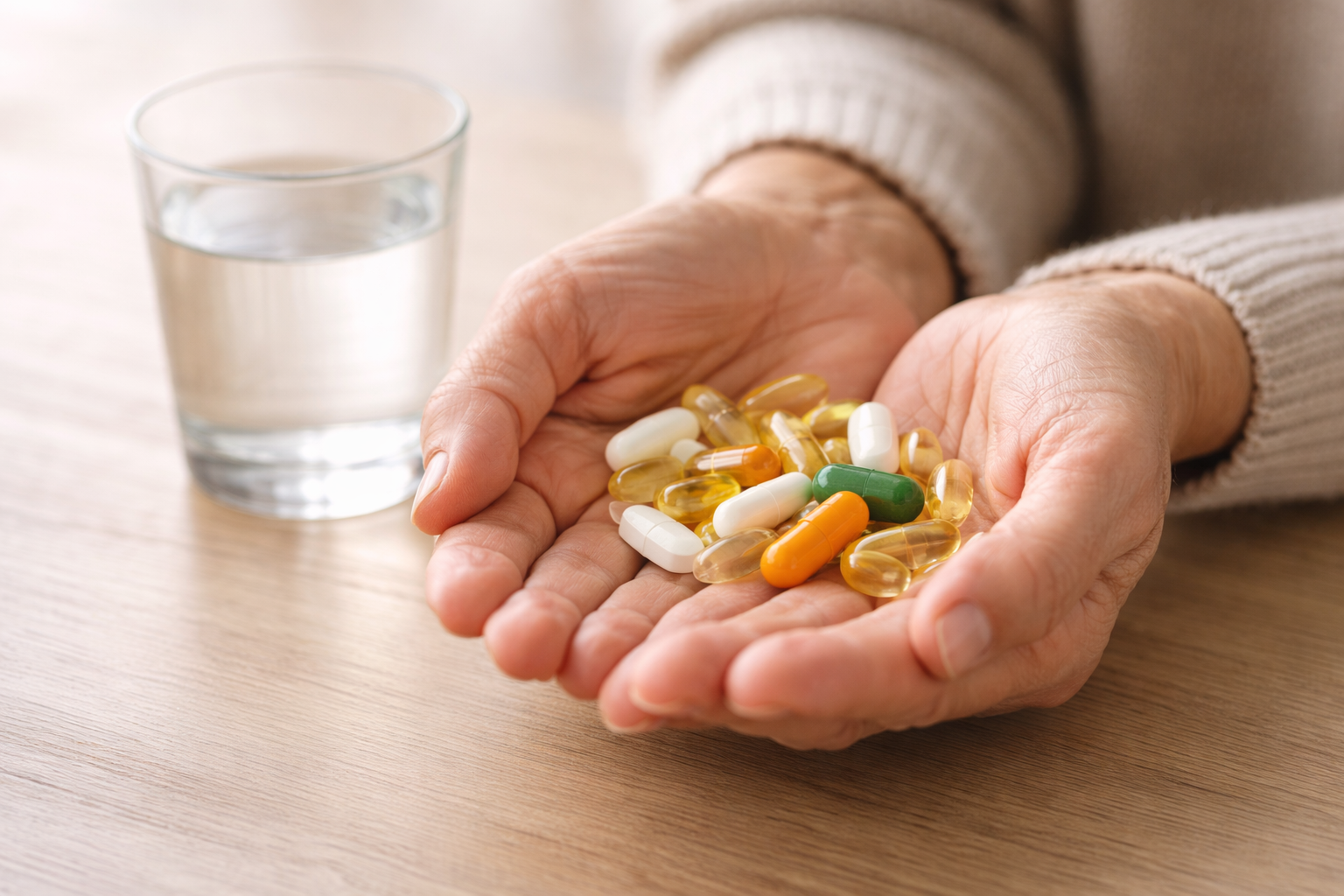
A pill for “eternal youth” is very tempting, and store shelves are full of supplements. Companies offer “rejuvenation from the inside” with capsules, but science asks an important question: is this a real weapon against aging, or just an expensive ritual that makes people feel better?
Marketing promises a lot, but there is not much strong proof behind it. On the other side, there is a lot of money and the natural fear of dementia, heart attack, or losing independence after the age of sixty.
Biological age and calendar age – what is the difference?
Your age on your ID card is one thing, but the real condition of your body is something else. Two people in their sixties can have very different blood vessels, brain function, and immune health.
Scientists describe biological age as the “wear and tear” of the body. They measure it by looking at chemical changes in DNA, called epigenetic clocks, the length of telomeres, which are the “caps” at the ends of chromosomes, the condition of the heart, lungs, kidneys, liver, and nervous system, and the level of inflammatory markers in the blood.
Research suggests that biological age can speed up because of an unhealthy lifestyle, but it may also slow down partly if a person starts taking better care of the body and mind.
Which supplements are most often linked with slowing aging?
Antioxidants – vitamins and plant compounds
One of the most popular theories says that aging speeds up because of free radicals, which are reactive particles that damage cells. This is why products with vitamin C, vitamin E, beta-carotene, resveratrol from red wine, coenzyme Q10, and green tea extracts are often promoted.
In laboratory studies, these substances really do protect cells. But in real life, in people living normal everyday lives, the effects are much less impressive. Large clinical studies have not shown clear life extension from taking antioxidants alone. Sometimes the results were even worse — for smokers, a high dose of beta-carotene was linked with a higher risk of lung cancer.
“Mitochondrial” and energy supplements
Another group of products claims to “boost” mitochondria, the energy centers of cells. These include alpha-lipoic acid, carnitine, NAD+ and its precursors such as NR and NMN, and also coenzyme Q10 in another role.
Some animal studies look promising — cell performance improves, and sometimes mice live longer. In humans, researchers mostly see a small improvement in some areas, such as fatigue or physical performance in certain groups. This is interesting, but it does not prove that biological age is being reversed in the whole body.
Supplements inspired by fasting
In animals, calorie restriction can extend life. Based on this idea, some supplements try to “copy” fasting without real hunger. This group includes some amino acids and compounds that affect mTOR and sirtuins.
Human studies are only just beginning, and the right doses, long-term safety, and real effect on age-related diseases are still very unclear.
What do clinical studies really show?
Scientists separate this into two questions: does a supplement improve one specific thing, such as blood pressure, cholesterol, or skin quality, and does it truly slow down the aging of the whole body and lower the risk of death or serious disease over time?
For the first question, the answer is sometimes carefully positive. The right vitamin D supplement can lower the risk of fractures in people with deficiency, omega-3 may support heart health in some patients, and B12 supplementation can protect against anemia when levels are too low.
For the second question, about truly slowing biological aging, science mostly still has no clear answer. The evidence is incomplete, short-term, and often based on very small groups of volunteers.
| Area | What the evidence suggests |
|---|---|
| Correcting deficiencies | Often brings real health benefits, for example vitamin D, B12, or iron, when chosen and monitored correctly |
| “Youth elixirs” for healthy people | No strong proof that they extend life or clearly reverse biological age |
| Very high doses of vitamins | Possible side effects, and in some studies a higher risk of certain diseases |
| Mixes of many ingredients “for everything” | Hard to predict interactions, with very few strong clinical studies |
Lifestyle vs capsules – what has a bigger effect on aging?
This part rarely appears in advertisements, but doctors agree: supplements are only a secondary tool. Lifestyle changes have a much bigger and better proven effect on how fast the body ages, especially after the age of fifty and sixty.
Exercise as the cheapest “anti-aging supplement”
Regular physical activity lowers the risk of heart disease, high blood pressure, type 2 diabetes, and dementia. It supports muscles and bones, lowers the risk of falls, improves mood and sleep, and in studies is linked with slower shortening of telomeres.
This does not mean people need to run marathons in their sixties. For many people, a real breakthrough is a fast walk five times a week, light strength training twice a week, and some balance exercises.
Sleep, diet, and stress – the underrated pillars of biological youth
Good sleep, balanced eating, and dealing with long-term stress do not sound exciting, but these things appear again and again in research on long life. In places where people live the longest in good health, common habits include: a lot of vegetables, beans, and whole grains, less ultra-processed food and sugar, regular sleep hours without constant late nights, and strong social connections with a sense of purpose in daily life.
If someone hopes that a capsule will repair the damage caused by no exercise, a poor diet, and constant lack of sleep, they will be very disappointed. Science gives no support for that idea.
When can a supplement really matter after the age of fifty?
The fact that a pill will not magically reverse biological age does not mean supplementation is always useless. In older people, some deficiencies happen more often for natural reasons — some nutrients are absorbed less well, appetite can be weaker, and the body works differently than it did at age thirty.
In practice, doctors often order tests and, if needed, recommend vitamin D, especially when there is little sun exposure, vitamin B12 in people with anemia or absorption problems, calcium if the diet is low in dairy or plant sources of calcium, and omega-3 for selected patients with heart disease.
This kind of support does not work like an “elixir of youth,” but it can help maintain function and lower the risk of some complications. It is more like carefully correcting shortages than trying to completely change the whole aging process.
What should you remember before taking a “youth” supplement?
Food supplements do not go through the same strict control as medicines. The label does not always perfectly match what is really inside the capsule, and mixtures with many substances are hard to test properly in large, long-term studies.
The risk becomes higher when someone combines several supplements with prescription medicines. This can lead to interactions, extra strain on the liver, blood clotting problems, or changes in blood pressure. For older people, who often already take several medicines every day, adding supplements without advice can be risky.
A sensible approach looks very different from advertising: first do tests and review everything you are taking, then talk to a doctor or pharmacist, and only after that think about choosing a specific product and checking the effects regularly.
More and more companies also offer biological age tests and then immediately suggest expensive supplement packages. Some specialists are doubtful about this model. Measuring epigenetic markers is an interesting scientific idea, but linking the result directly to a special “cocktail” of capsules is often based more on marketing than on strong evidence.
For many people, the best “investment in biological age” turns out to be something much simpler: regular walking, a little exercise using body weight, a calmer daily rhythm, and a few small but steady improvements on the plate. Supplements can be an extra in well-justified situations, but they cannot replace everyday choices that decide how fast the body ages in the long term.