

Bowen’s disease often begins quietly, with a faint red patch that seems strikingly similar to eczema yet refuses to settle down. People tend to ignore such marks, assuming they’re dryness from winter winds or irritation from a new detergent, but the persistence of this patch signals more than a passing skin annoyance. It represents a curious phase where abnormal cells linger on the surface layer of the skin, waiting to be noticed. Because the lesion grows slowly, many individuals delay care, allowing discomfort to become routine, which is particularly harmful given how remarkably effective early treatment can be.
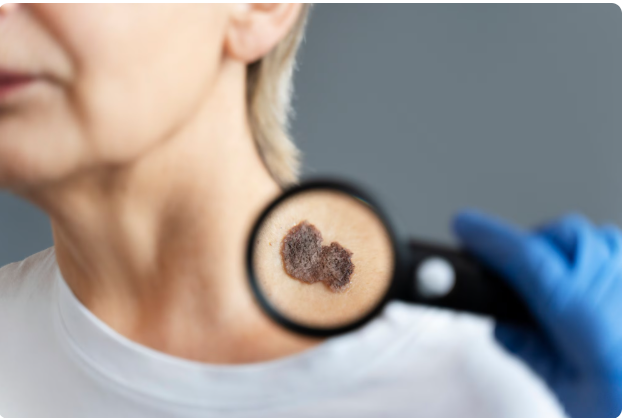
In recent days, dermatologists have stressed how essential it is to identify subtle signs sooner. That red patch, often slightly scaly or crusted, tells a story about sun exposure accumulated over years. For some, it reflects a lifetime of outdoor routines, whether sunny commutes, gardening afternoons, or seaside holidays. For others, it hints at damage intensified by tanning lamps or weakened immune systems. The emotional sting comes from realizing how something so deceptively minor can evolve, yet the forward-looking view reassures patients that Bowen’s disease carries an exceptionally clear path to treatment when caught early.
| Category | Information |
|---|---|
| Condition | Bowen’s Disease (Squamous Cell Carcinoma in situ) |
| Nature | Early, slow-growing form of skin cancer |
| Appearance | Red, scaly, crusted patch; may resemble eczema or psoriasis |
| Common Locations | Face, hands, legs, trunk, genital area |
| Causes | UV exposure, HPV, arsenic, weakened immune system |
| Key Early Symptoms | Itching, redness, soreness, persistent skin changes |
| Advanced Concerns | Risk of progression to invasive cancer if untreated |
| Diagnostic Method | Skin biopsy |
| Treatment Options | Topical therapy, cryotherapy, photodynamic therapy, surgery |
| Prevention | Sun protection, HPV prevention, regular skin checks |
| Reference Link |
People often describe the initial symptom as a stubborn spot that seems particularly irritated after showers or mildly itchy without reason. It rarely appears alarming because most patches remain painless and small. That subtlety makes the condition incredibly versatile in the ways it hides itself, affecting sunlit areas such as hands and legs yet also emerging on spots like the genital region, where HPV can be involved. In those regions, darker or wart-like patches introduce a different challenge, often provoking anxiety before diagnosis clarifies what is happening.
Patients recount how they noticed something insignificant, like a reddish oval that looked slightly flaky, then watched it linger for months. Some say they applied moisturizers repeatedly, believing it would fade, only to learn that moisturizers do little for a lesion held in place by abnormal cell patterns. These personal accounts echo across clinics, highlighting how symptoms may be underestimated until a dermatologist takes a closer look. Once a biopsy confirms Bowen’s disease, the fear sharpens briefly, then shifts toward relief as providers explain that this early cancer stage has notably improved outcomes when treated promptly.
Understanding why Bowen’s disease develops often helps people navigate the diagnosis with confidence. By collaborating with researchers, dermatologists can map connections between environmental exposure and cellular behavior. Ultraviolet radiation remains the primary culprit, which is unsurprising given how significantly faster the skin ages under harsh sunlight. But arsenic exposure, once documented in industrial workers, also plays a role in some cases. Immunosuppressed individuals, particularly organ-transplant recipients, face higher risks because their bodies cannot efficiently manage abnormal cells. Even HPV infections contribute to lesions in genital or perianal regions, reminding patients how intricately the skin reacts to internal and external pressures.
While the causes vary widely, the emotional impact remains strikingly similar across patients: confusion followed by determination. One grandmother from Cork described how her patch stayed unchanged for years before finally prompting concern. After a biopsy, her doctor assured her that treatment would be particularly beneficial because she acted before the lesion deepened. She later said the experience convinced her entire family to pursue regular skin screenings, especially after learning how a simple red patch can quietly progress if ignored.
Through strategic partnerships with global cancer organizations, researchers continue refining treatment options. Some methods rely on topical chemotherapy creams that noticeably reduce abnormal cells over several weeks. Others embrace cryotherapy, where freezing temperatures disrupt the lesion. Photodynamic therapy, remarkably effective for larger or delicate areas, uses light to target diseased cells while preserving surrounding tissue. Surgery sometimes becomes necessary, yet outcomes remain highly efficient, offering lasting reassurance. People appreciate the personalized nature of treatment, as dermatologists adjust methods to fit age, location, skin type, and comfort level.
For many, the greatest anxiety does not come from the treatment itself but from uncertainty about whether the disease might advance. Providers often explain that untreated Bowen’s disease carries a small but real chance of progressing into invasive squamous cell carcinoma. That possibility encourages patients to act early, though the consolation lies in how exceptionally durable the skin remains when treated on time. Once the lesion is removed or neutralized, recurrence rates drop significantly, giving individuals a notably improved sense of security.
During the pandemic, stories circulated about people skipping routine appointments, only to later discover patches that had expanded quietly. These accounts fueled renewed emphasis on skin awareness campaigns, reminding communities how beneficial it is to check arms, legs, backs, and even less visible zones. Celebrities with strong voices in public health have reinforced these messages, using their platforms to spotlight skin cancer risks. Their advocacy demonstrates how awareness can expand through modern storytelling, making dermatology more accessible for younger audiences who may not think about sun damage yet already experience its effects.
Social conversations around HPV prevention have also shaped how people view genital lesions associated with Bowen’s disease. Public figures who previously discussed HPV-related cancers helped encourage vaccination, and these campaigns indirectly reduce cases of genital Bowen’s disease. The overlap between sexual health education and dermatology creates meaningful progress, emphasizing prevention rather than reaction. Parents increasingly discuss sun safety and HPV protection in the same breath, nurturing a generation that approaches health with broader awareness.
The long-term outlook for Bowen’s disease remains deeply encouraging. Medical teams increasingly integrate digital tools for tracking lesions, enabling patients to compare photos over time and recognize changes quickly. Dermatologists appreciate how these visual records streamline appointments and highlight slow developments that might otherwise remain hidden. By leveraging such tools, individuals feel more empowered, recognizing how proactive monitoring can be remarkably effective at catching abnormalities early.
In the context of aging populations, Bowen’s disease appears more frequently, yet advancements in treatment continue to expand. Elderly patients often benefit from gentle therapies like photodynamic treatment, which preserves comfort while slowing cellular irregularities. Younger adults, though less commonly diagnosed, bring a different perspective by openly discussing their symptoms online. Their transparency sparks relatable conversations, making skin care feel less clinical and more connected to daily routines, such as using sunscreen or noticing small changes after summer holidays.
Through all these developments, one message stands consistently clear: early recognition transforms outcomes. The persistence of a patch, the slight roughness under a fingertip, or a subtle shift in skin tone may seem trivial, but the decision to examine it holds immense power. Bowen’s disease teaches a striking lesson about paying attention, especially when the body sends signals that feel faint but steady. Each diagnosis becomes an invitation to care more attentively, not fearfully, and that mindset encourages broader health habits across communities.